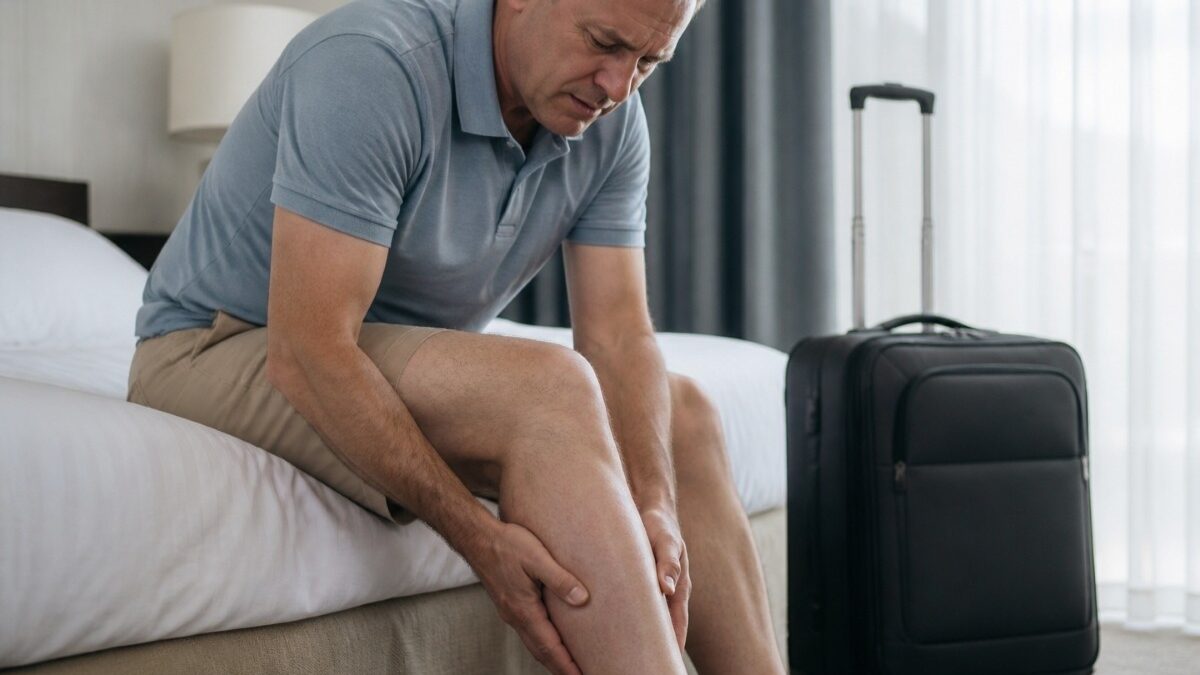
A deep vein thrombosis, or DVT, is a blood clot that forms in one of the large veins deep inside the leg, usually in the calf or thigh. The clot blocks blood flowing back toward the heart, which is why the leg swells. The real danger is that a piece can break loose, travel to the lungs, and block an artery there. That is a pulmonary embolism, and it can be fatal within hours. In 2026, clots remain highly treatable, as long as people are treated early.
What Does a Blood Clot in the Leg Feel Like?
The most telling sign is swelling in one leg but not the other. If your right calf is noticeably bigger than your left, pay attention. The skin over the clot often feels warm and may look red, purple, or darker than nearby skin.
The pain is often a deep cramp, like a pulled muscle, that does not ease with rest or stretching and worsens when you stand or walk. A charley horse goes away in minutes. A clot does not.
Early stage DVT can be subtle. Some people only notice mild tightness or heaviness. Others have no leg symptoms at all until the clot reaches the lungs.
Shortness of Breath and Blood Clots: Signs It Has Reached Your Lungs
A pulmonary embolism strikes suddenly. These signs mean call 911 or get to the ER immediately:
- Shortness of breath that comes on fast, even at rest
- Sharp chest pain that gets worse when you breathe in or cough
- Coughing up blood or blood-streaked mucus
- A racing or pounding heartbeat
- Feeling lightheaded, or fainting
Calf pain and shortness of breath together should never be brushed off. If you have both, assume the clot has moved until a doctor proves otherwise.
Swollen Legs After a Flight, Surgery, or Pregnancy: Who Is at Risk
Clots form when blood pools and slows, when a vein wall is injured, or when blood clots more easily than normal. Long car rides and flights keep the legs still and bent, letting blood pool in the calves. Swollen legs after a flight are worth checking, especially if the swelling happens in only one leg.
Hip, knee, or abdominal surgery raises risk for weeks afterward, as does bed rest. Pregnancy and the six weeks after delivery increase clotting as the body prepares to control bleeding. Estrogen-containing birth control and hormone therapy do the same. Cancer, smoking, obesity, and a previous clot all add risk, and the risks stack.
Why Waiting to See if Leg Swelling Goes Away Is Risky
A clot in your calf today can be in your lungs tomorrow. There is no way to tell from the outside whether it is stable or about to break loose, and swelling that eases with elevation does not mean it is gone. People who felt fine aside from a sore leg can collapse without warning. Untreated clots also damage the vein valves, causing chronic swelling and pain for years.
How the ER Checks for a Blood Clot
Sugar Land ER has every necessary test on-site. A D-dimer blood test looks for a protein released when the body breaks down clots, and our laboratory returns results during your visit. A normal D-dimer in a low-risk patient can rule out a clot.
If the D-dimer is elevated or symptoms are strong, a leg ultrasound shows whether a clot is blocking the deep veins. If a pulmonary embolism is a concern, a CT angiogram of the chest, read by our board-certified radiologists, shows the lung arteries directly.
How Blood Clots Are Treated
Blood thinners are the main treatment for both DVT and pulmonary embolism. They do not dissolve the clot, but they stop it from growing and prevent new ones while the body clears it. Most people start a pill or injection in the ER and continue for at least three months.
A large pulmonary embolism that strains the heart or drops blood pressure may need clot-busting medication or a catheter procedure to remove it. In that case our board-certified physicians stabilize you first and arrange transfer to a hospital that performs those procedures.
What to Do Right Now if You Think You Have a Clot
Do not massage or rub the swollen leg; pressure can dislodge the clot. Do not wrap it tightly or apply heat.
If you have any shortness of breath, chest pain, or lightheadedness, do not drive yourself. Call 911 or have someone bring you. If your only symptom is a swollen, painful leg, come straight to Sugar Land ER at 222 Hwy 6, at any time, day or night. We are open 24 hours with no wait, and we can confirm a clot and start treatment within hours.