Most food poisoning gets better on its own within a day or two. Some of it does not. The hard part is telling the difference when you are on the bathroom floor at 2 a.m. This guide walks through what food poisoning usually looks like, the warning signs that mean you need medical care, and who should get checked sooner rather than later.
Go to the ER Now If You Have Any of These
The Centers for Disease Control and Prevention says to see a doctor for severe symptoms, including:
- Bloody diarrhea
- Diarrhea that lasts more than 3 days
- A high fever, over 102°F
- Vomiting so often you cannot keep liquids down
- Signs of dehydration: peeing very little, a dry mouth and throat, or feeling dizzy when you stand up
Get emergency care right away for confusion, fainting, severe belly pain that will not ease, or a child who is unusually sleepy or hard to wake. Call 911 for anyone who is unresponsive or struggling to breathe.
Common Symptoms of Food Poisoning
The CDC lists the most common symptoms as diarrhea, stomach pain or cramps, nausea, vomiting, and fever. Most people have some combination of these rather than all of them.
How Soon Symptoms Start
It depends on the germ, which is why the last meal is not always the one to blame. The CDC notes that some germs, such as Staphylococcus aureus, can make you sick within about 30 minutes to 8 hours. Norovirus usually shows up within 12 to 48 hours, and Salmonella anywhere from about 6 hours to 6 days. Others, such as Listeria, can take weeks.
Who Should Get Checked Sooner
According to the CDC, some groups are more likely to get seriously ill from food poisoning:
- Adults 65 and older
- Children under 5
- People with a weakened immune system
- Pregnant women
For these groups, symptoms that would be a rough day for a healthy adult can turn serious quickly, mostly through dehydration. Pregnant women with a fever and flu-like symptoms should contact a doctor, because some foodborne infections can affect the pregnancy.
Dehydration Is the Real Danger
Repeated vomiting and diarrhea drain fluid faster than most people can replace it. Sip small amounts of water or an oral rehydration drink often rather than gulping a large glass at once. If you cannot keep anything down for several hours, or you notice the dehydration signs above, that is the point to come in. Our guides to dehydration, diarrhea and dehydration, and nausea and vomiting explain the warning signs in more detail.
Food Poisoning Around the Holidays
Big holiday meals bring more cooking, more leftovers, and food that sits out longer than it should. Keep hot food hot and cold food cold, refrigerate leftovers promptly, and cook poultry all the way through. See our tips on holiday health emergencies for more.
What Happens at the ER
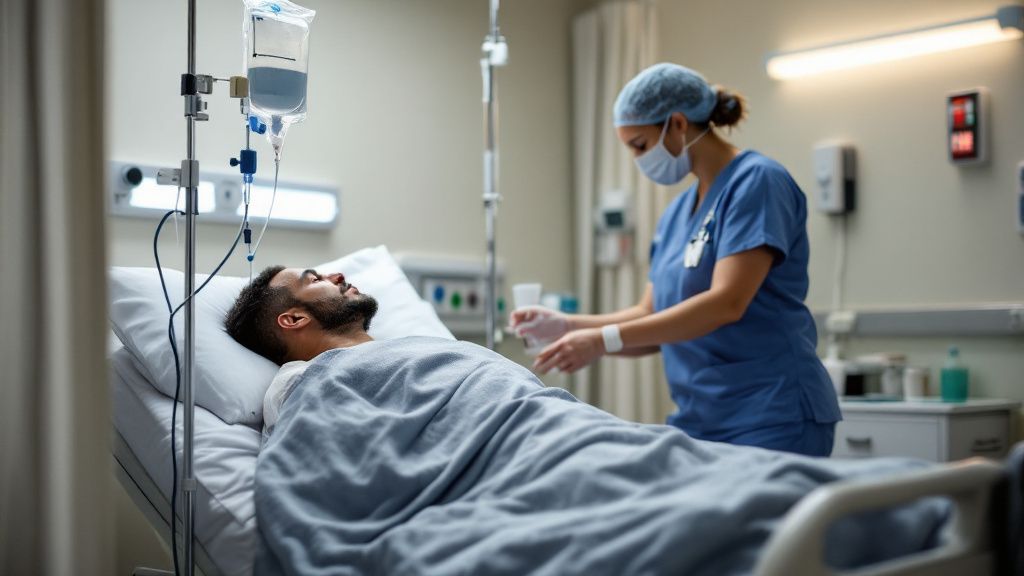
The emergency team will check your vital signs and look for dehydration. Depending on your symptoms, that can include blood work through our on-site lab, IV fluids, and medicine to control nausea. If the pain is severe or in one spot, the physician may order imaging to rule out other causes of abdominal pain, such as appendicitis.
Get Checked at Sugar Land ER
Sugar Land ER is open 24 hours a day, every day, with a strict no-wait policy, board-certified emergency physicians, an on-site COLA-certified laboratory, and on-site imaging. Check in online or call (281) 697-5250. If symptoms are sudden or severe, call 911 instead of driving.