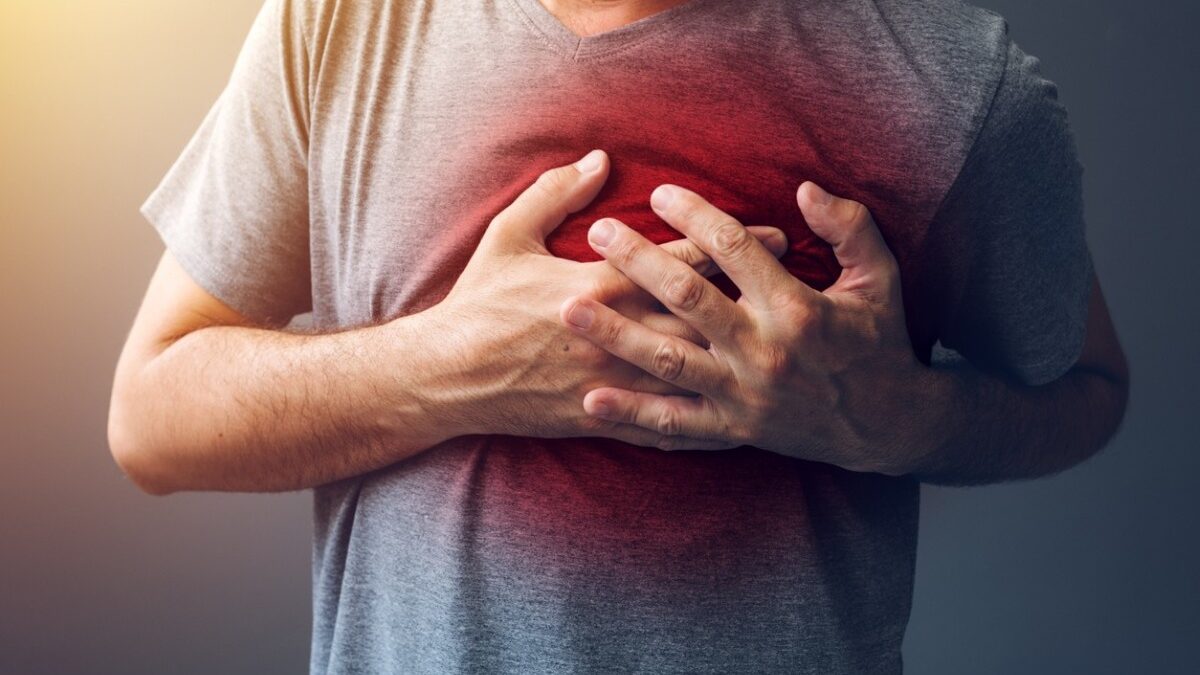
Chest pain that starts during or right after a meal is a common complaint, and most of the time it comes from the digestive tract rather than the heart. Acid reflux, esophageal spasms, gallbladder inflammation, and stomach ulcers can all create burning or pressure in the middle of the chest. The trouble is that a heart attack can produce nearly the same feeling. Eating also raises your heart rate and draws blood toward your stomach, which can trigger cardiac chest pain in someone with narrowed arteries.
Heartburn or Heart Attack? Why They Feel the Same
Your heart and your esophagus sit close together and share nerve pathways that carry pain signals to the brain. Those signals are not precise. The brain often cannot tell which organ sent them, so both problems get reported as the same vague pressure behind the breastbone.
Doctors do use the term non-cardiac chest pain, but that label gets applied after testing rules out the heart. It is a conclusion, not a starting guess.
Acid Reflux, Gallbladder Attacks, and Esophageal Spasms
Acid reflux is the most common. It tends to burn, get worse when you lie down or bend over, and come with a sour taste or the feeling of food coming back up. Large meals, fatty foods, alcohol, and late-night eating all make it more likely.
Gallbladder attacks usually cause pain in the upper right abdomen that can spread into the chest, right shoulder, or back. They often follow greasy meals and can last for hours. Esophageal spasms cause sudden squeezing pain that may also make swallowing difficult. Any of these can send you to the ER as a sudden illness that needs sorting out the same day.
Signs Your Chest Pain Is Your Heart, Not Your Stomach
Certain features shift the odds. Pain brought on by physical effort that eases with rest is a classic sign of reduced blood flow to the heart, and it matters even if the pain also shows up after meals. So does pain that spreads to the jaw, neck, back, or either arm.
The symptoms that travel with the pain matter too. Heart attack warning signs include chest discomfort together with shortness of breath, cold sweat, nausea, dizziness, and unusual fatigue. Those do not belong to ordinary heartburn.
Your health history counts as much as your symptoms. Risk rises with age, high blood pressure, diabetes, high cholesterol, smoking, and a family history of early heart disease.
Does Antacid Relief Rule Out a Heart Attack?
This is the most dangerous assumption people make about chest pain after eating. Relief following an antacid does not confirm the pain was reflux. Cardiac chest pain can fade on its own during the same few minutes you happen to take one, and the timing feels like proof when it is only coincidence.
The reverse happens too. Reflux pain sometimes ignores antacids completely. Neither response tells you which organ is involved.
When to Call 911 for Chest Pain After Eating
Some situations should not wait. Call 911 right away if chest pain after eating comes with:
- Shortness of breath, cold sweat, or lightheadedness
- Pain spreading to the jaw, neck, back, or arm
- Discomfort lasting more than a few minutes or returning again and again
- Fainting, confusion, or a pounding or racing heartbeat
Do not drive yourself. Paramedics can run an EKG on the way and start treatment before you arrive, and they can act if your condition changes during the drive. That head start matters more than the few minutes you might save behind the wheel.
What the ER Checks: EKG, Troponin, and Ultrasound
Two tests answer most of the question quickly. An EKG records the heart’s electrical activity and can reveal a blockage in progress. A blood test for troponin, a protein released when heart muscle is injured, catches damage an EKG can miss. Troponin is often drawn more than once a few hours apart during a period of testing and observation, because one normal result early in an episode does not always tell the whole story.
If the heart checks out, attention turns to the digestive causes. Ultrasound can look at the gallbladder, and imaging can check for other sources of pain in the same visit.
Get Chest Pain After Eating Checked at Sugar Land ER
Chest pain after eating deserves an answer rather than a wait-and-see week, especially if it keeps happening or is new for you. Finding an emergency room near you before symptoms escalate saves time when it counts.
Sugar Land ER is open 24 hours a day, every day, with a strict no-wait policy, board-certified emergency physicians, an on-site COLA-certified laboratory, and on-site imaging including X-ray, ultrasound, and CT. You can check in online at ercaresugarland.com before you come or call (281) 697-5250 with questions. If your symptoms are sudden or severe, call 911 first and let the paramedics start your care on the way.